A Minecraft code claim usually becomes confusing when players treat Java, Bedrock, Minecoins, and Realms as if all four belong to the same redemption system. A real code works inside a defined product path, and that path changes depending on what the code was issued for in the first place.
This page explains what a Minecraft redeem code can really cover, how official redemption usually behaves, where users get misled, and what you can check before you trust a page that promises game access or Minecoins.
Tap to reveal your gift code
Tap to reveal your gift code
Tap to reveal your gift code
Tap to reveal your gift code
Tap to reveal your gift code
Tap to reveal your gift code
Tap to reveal your gift code
Tap to reveal your gift code
Tap to reveal your gift code
Tap to reveal your gift code
What a Minecraft Code Can Really Cover
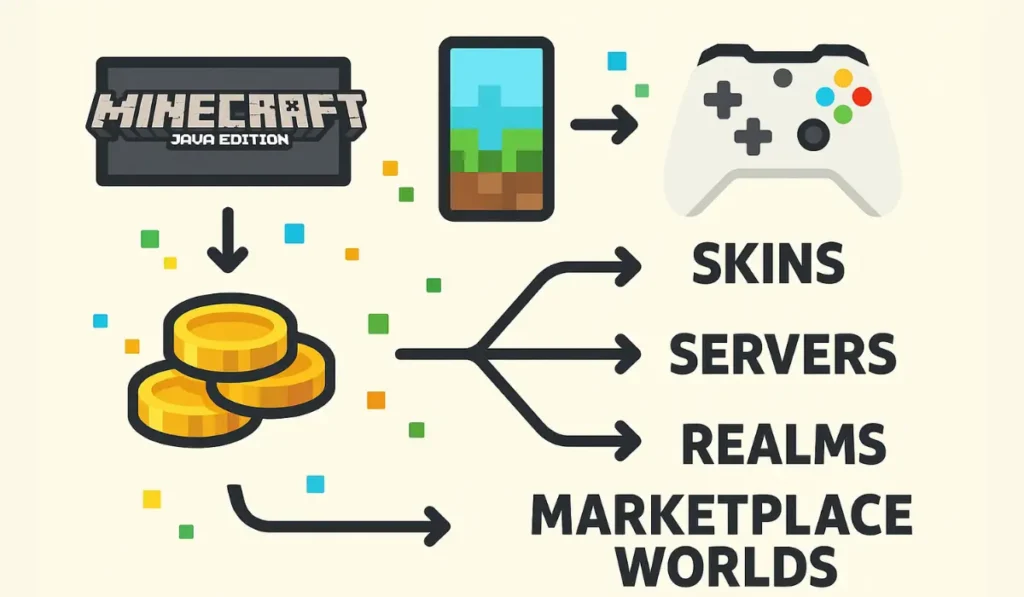
A Minecraft code does not point to one universal reward. A code may cover game ownership, Marketplace balance, a Minecoins bundle, or a partner promotion tied to a Microsoft account. A player usually gets into trouble when a page talks about all of them as if one code can unlock the whole Minecraft system at once.
| Claim type | What the user usually sees | What the code normally affects | What usually goes wrong |
|---|---|---|---|
| Game ownership | A Microsoft or Minecraft redemption step | Access to a defined edition | A user expects Java and Bedrock from the same code |
| Minecoins | Balance added to a supported account | Marketplace spending only | A user expects server or Realms access from coin balance |
| Promotion code | A short issue window with fixed terms | A skin, bundle, or campaign reward | A user reaches the page after stock is already gone |
| Gift card balance | A store level redemption screen | Store credit within the supported platform | A user redeems on the wrong account or wrong store |
Why Java and Bedrock Cause So Much Confusion
A lot of thin Minecraft pages fail here. A player reads about Minecoins, then reads about Java access, then reads about Realms, and the article never explains that the user may be moving between separate systems with separate account behavior. A real claim page should tell you what edition the code belongs to before it tells you what reward you may get.
A user usually notices the mistake after redemption starts. A Bedrock oriented code path points toward Microsoft account handling and supported devices. A Java buyer usually expects launcher access and account ownership behavior that feels different from Marketplace spending. A page that blurs those differences creates false confidence before the user has checked the basics.
How a Real Minecraft Redemption Usually Behaves
A real redemption flow feels short and boring. A user signs in, enters the code, and gets a clean result. A valid code attaches a clear entitlement or balance. An invalid code fails without dragging the user through fake verification screens.
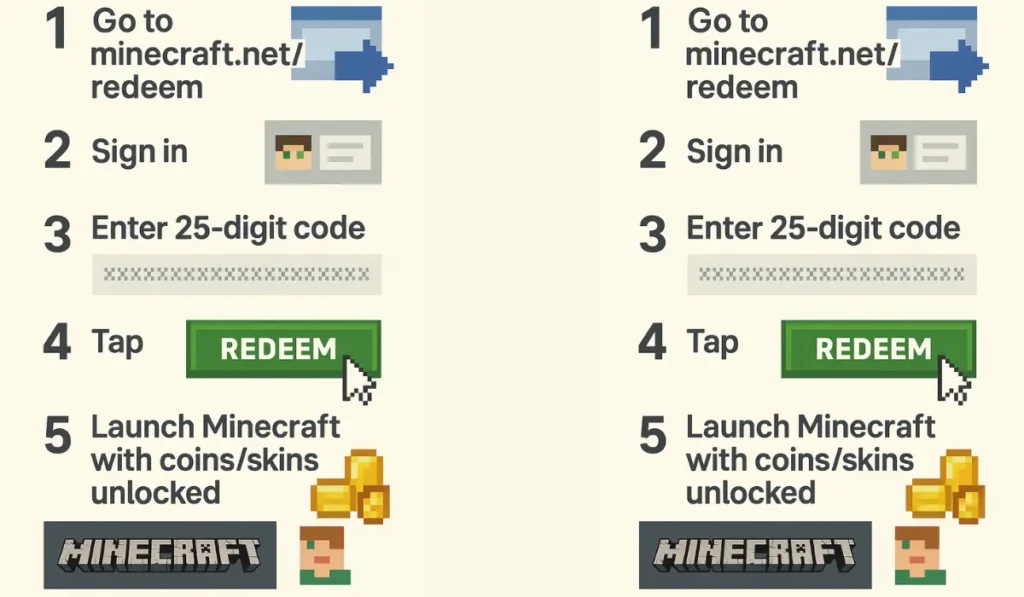
- A player opens the official redemption page or the matching Microsoft store path.
- A player signs in with the account that should receive the game, balance, or reward.
- A player enters the code and gets an immediate success or failure response.
- A player checks the account library, balance area, or Marketplace result after redemption.
A user can compare that behavior with the official Minecraft redemption page at Minecraft redeem. A second useful reference is the official Marketplace and account support material from Minecraft Help Center.
What Scam Behavior Looks Like on Minecraft Code Pages
A fake page usually builds pressure before it shows proof. A user sees a countdown, a fake inventory number, or a claim button that leads into surveys and device checks. That pattern matters because a real code page does not need to stall the user in order to prove the reward exists.
A common trap looks very plain in practice. A player enters a username, watches a loading bar, and then gets told to install an unrelated app or finish a survey before Minecoins can appear. That behavior is not a delayed unlock process. That behavior is the warning sign that the page never had a valid code behind it.
- A fake page keeps adding survey steps after the claim has already started.
- A fake page asks for account credentials outside the official store or game site.
- A fake page promises Java access, Minecoins, and Realms from the same unnamed code.
- A fake page hides the issuing source and shows no platform terms.
What to Check Before You Trust a Minecraft Drop
A careful check starts with the source and the edition. A user should know who issued the code, which account receives it, and which part of the Minecraft ecosystem it affects. A player who skips those checks usually ends up blaming the code when the real problem is platform mismatch.
- The issuing source should be visible and named.
- The code should point to one product path, not every Minecraft product at once.
- The claim route should stay inside Microsoft or Minecraft controlled redemption steps.
- The source should mention region, stock limit, or expiry if those terms exist.
What Failure Usually Means on a Minecraft Code
A failed redemption does not always mean the code source was fake. A real code may fail because another user redeemed it first, because the issue window is over, or because the code belongs to a different platform flow than the one the player expected. A useful article should explain those failure patterns instead of repeating the reward promise again.
A player who sees an instant failure on the official route should stop and check the code source, region notes, and edition notes before trying random pages from search results. A player who keeps jumping from one generator page to another usually loses more time and exposes the account to more junk prompts.
Final View on Minecraft Code Claims
A good Minecraft reward page leaves the reader with a clearer filter, not a louder promise. A real code claim looks controlled, platform bound, and easy to verify. A fake code claim looks dramatic, delayed, and vague about what product the code even belongs to.
A player who checks the edition, account path, and issue source has a much better chance of reading this topic correctly. A player who treats every Minecraft reward page as if all code types work the same way usually walks straight into the confusion that thin pages create.
Related reward guides
If you want nearby game reward comparisons, read our Roblox gift card guide, the Roblox Rs 520 gift card page, and the Steam gift cards giveaway guide.
Frequently Asked Questions
Can one Minecraft code unlock Java, Bedrock, and Minecoins together?
A normal Minecraft code does not cover all of those at once. A valid code usually belongs to one defined product path, so the user needs to check the issuing terms before redemption starts.
What is the first sign that a Minecraft code page is misleading?
A misleading page usually avoids naming the issuing source and starts adding surveys or app installs before the user reaches a real Microsoft or Minecraft redemption step.