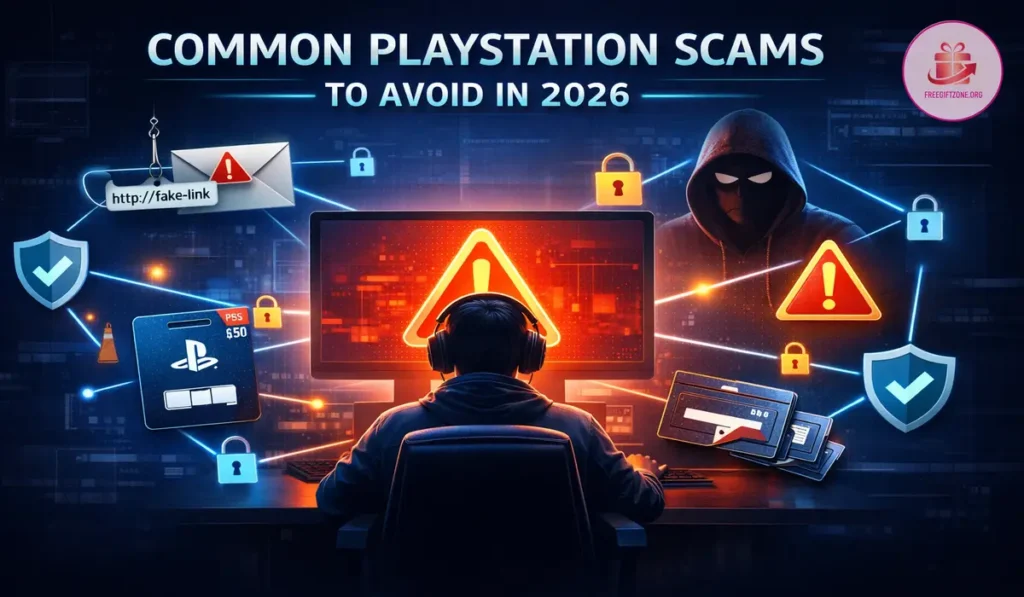
PlayStation scams do not disappear simply because players become more experienced, and in many cases, they grow more convincing as design, language, and imitation improve year after year. You may think that only new users fall into these traps, yet many reports involve long-time players who understood basic safety rules but reacted quickly to urgency, fear, or excitement. The structure of most scams stays surprisingly similar, but the presentation changes just enough to feel fresh and believable.
1. Fake PlayStation Support Scams
This guide explains how common PlayStation scams operate, what patterns repeat across them, and how you can evaluate any suspicious situation before reacting. Sony’s own guidance on unauthorised payments andcompromised accounts is useful context because many scam flows ultimately try to push users into the same account-risk territory.
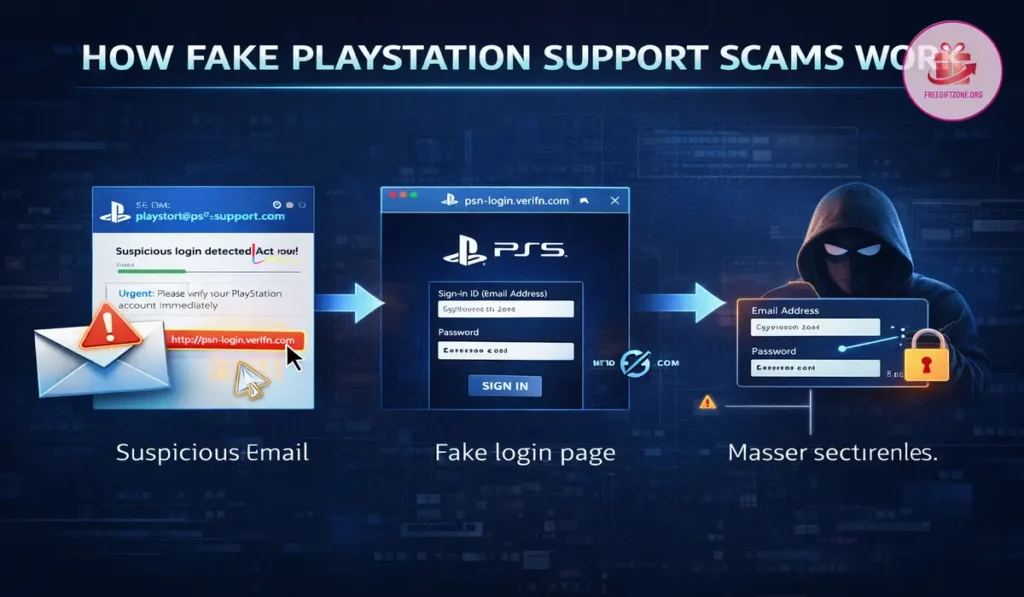
Fake support scams remain one of the most common threats because they attack something personal, which is your account access. These messages usually claim that suspicious activity was detected, that your account will be suspended, or that payment verification is required immediately.
The trap works because the message creates pressure. When you believe your account is at risk, you react before verifying.
How the Scam Is Structured
You receive an email, SMS, or even a call that looks professional and structured. The message may include logos, formatting, and references to account security. A link directs you to a login page that looks almost identical to the real PlayStation website.
When you enter your login details, the information goes directly to the scammer rather than to PlayStation.
Red Flags You Should Notice
- The sender email contains slight spelling variations
- The link does not match the official playstation.com domain
- The message asks for password or wallet codes
- Urgent deadlines appear within hours or minutes
PlayStation does not ask for your password through email, and it does not require gift card codes to unlock accounts. Any message requesting those details signals imitation rather than legitimate support.
2. Free PSN Code Generator Scams
Free code generator websites continue to circulate because they promise something players want without effort. These pages simulate technical activity using animations, progress bars, and fake validation screens that create the illusion of real processing.
The design encourages belief because visual activity suggests technical legitimacy.
What Actually Happens
The site eventually directs you to surveys, app downloads, or repeated verification loops. No valid PlayStation Network codes are generated because code creation happens inside Sony’s internal systems, not through public tools.
The following comparison makes this clear.
| Claim | Reality |
|---|---|
| Instant code generation | Codes are issued only through Sony systems |
| Unlimited free supply | Codes are limited and controlled |
| No account required | Redemption always requires an account |
| Human verification unlocks the reward | Verification leads to survey loops |
When a page promises unlimited free codes without any official structure, it relies on visual simulation instead of system access.
3. PlayStation Giveaway and Influencer Impersonation
Social media impersonation scams target players through platforms like Instagram, YouTube, or X. You might receive a direct message claiming you won a giveaway or see a reply under a comment stating that you were selected.
These scams copy branding, profile images, and language patterns from real creators or gaming pages.
How the Trap Escalates
After initial contact, the scammer requests a small shipping fee, processing charge, or verification payment in the form of a PlayStation gift card. The payment request is framed as temporary or refundable, which lowers resistance.
Warning signs include:
- Recently created accounts with minimal history
- Low follower engagement despite high claims
- Requests for payment before reward delivery
- Movement to private messaging quickly
Legitimate giveaways do not require winners to pay fees to receive digital rewards.
4. Account Recovery and Password Reset Scams
Account recovery scams resemble fake support attempts but focus specifically on password resets. You receive a message instructing you to reset your password immediately due to suspicious activity. If you need the official route, PlayStation documents the standard process for a PSN password reset, which looks very different from scam-style prompts.
The message includes a link that leads to a cloned login page designed to capture credentials.
How to Protect Yourself
You should manually type playstation.com into your browser rather than clicking links inside messages. Enabling two step verification adds another layer of protection because even if credentials are exposed, account access cannot be completed without the second factor.
Check the sender’s domain carefully and avoid acting under pressure.
5. Marketplace and Discount Subscription Scams
Discounted PlayStation Plus subscriptions and cheap digital games often appear in private groups, messaging apps, or social media posts. The price looks attractive because it is significantly lower than the official store.
The structure behind these offers usually involves stolen payment methods or fraudulent transactions.
Why Cheap Deals Create Bigger Problems
When a subscription is purchased using stolen card information, chargebacks eventually occur. Sony detects irregular activity, and the subscription can be revoked. In some cases, the account involved may face temporary suspension.
The comparison below highlights safer paths.
| Offer Type | Safe Source | Risky Source |
|---|---|---|
| PlayStation Plus | Official PlayStation store | Social media reseller |
| Digital game codes | Verified retailer | Messaging app seller |
| Wallet top up | PlayStation store | Unknown website |
| Seasonal discounts | Official promotion | Private link offer |
Lower price does not equal lower risk. In many cases, it signals hidden fraud.
6. Emotional Manipulation Scams
Some scams operate slowly rather than instantly. An online gaming friend may build trust over weeks before introducing a crisis or emergency. The story often involves travel issues, medical needs, or temporary financial trouble.
The request eventually shifts toward PlayStation gift cards or wallet transfers.
Behavioral Pattern
The pattern usually follows three stages. Trust is built gradually through shared gaming sessions or conversation. Urgency is introduced through an emotional story. Payment is requested in a format that cannot be reversed easily.
Gift cards are chosen because once codes are shared, recovery is nearly impossible.
Why Smart Players Still Fall for These Scams
Scams succeed because they exploit natural human reactions rather than technical ignorance. Urgency reduces thinking time. Authority reduces questioning. Familiar branding lowers suspicion. Small initial compliance increases the likelihood of larger actions.
When you respond quickly without verification, the scam gains momentum.
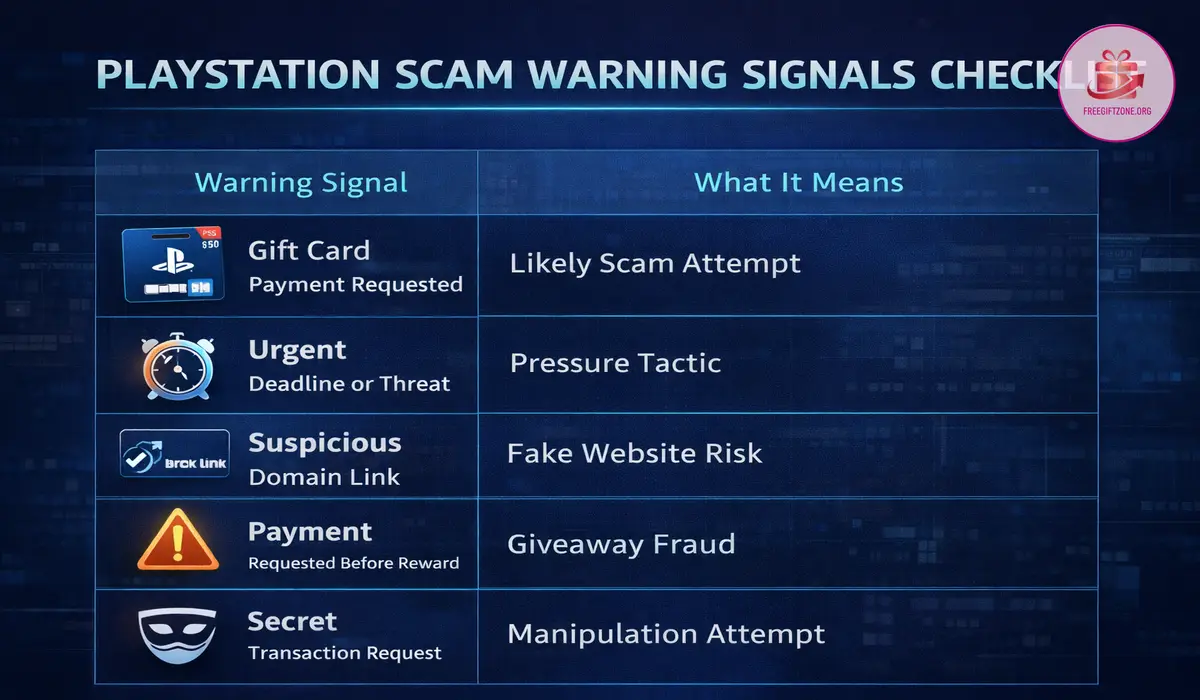
Early Warning Signals Checklist
- Payment requested in gift cards
- Urgent deadline attached to threat
- Instruction to keep transaction secret
- Link that does not match official domain
If any one of these signals appears, pause before proceeding.
What to Do If You Suspect a Scam
If you believe your information was exposed, change your PlayStation password immediately and enable or reset two step verification. Contact official PlayStation support through the official website rather than through message links.
You can also report the incident to the Federal Trade Commission in the United States or to your local cybercrime authority. Reporting may not reverse the loss, but it reduces future damage.
Reflection
PlayStation scams do not rely on complex hacking in most cases. They rely on speed, imitation, and emotional pressure. When you slow down, verify independently, and avoid gift card payments outside official systems, the majority of scams lose their effectiveness.
The difference between a safe decision and a costly mistake often comes down to a single pause before action.
Frequently Asked Questions
Can PlayStation recover stolen gift card codes?
Once a PlayStation gift card code is redeemed by another account, recovery becomes extremely difficult because gift card codes function similarly to cash once used. Contacting official support quickly improves documentation, but reversal is not guaranteed.
How do scammers get my email?
Email addresses may be obtained from public leaks, data breaches, or random bulk targeting. Scammers often send large volumes of messages, hoping a small percentage will respond.
Are PlayStation gift card scams traceable?
Some scam operations can be investigated, but individual gift card redemptions are difficult to reverse after use. Reporting still helps build larger enforcement cases.
Should I trust social media sellers offering cheap subscriptions?
Offers significantly below official pricing usually involve fraud risk, including stolen payment methods or account compromise. Purchasing directly from official or verified retailers reduces long-term risk and protects your account standing.
Final Safety Checklist Before Any PlayStation Payment
- Verify the domain before entering credentials
- Avoid gift card payments for unlocking or verification
- Never share wallet or gift card codes
- Confirm offers inside the official PlayStation app or website
When you combine verification with patience, most PlayStation scams become easier to identify and avoid.